
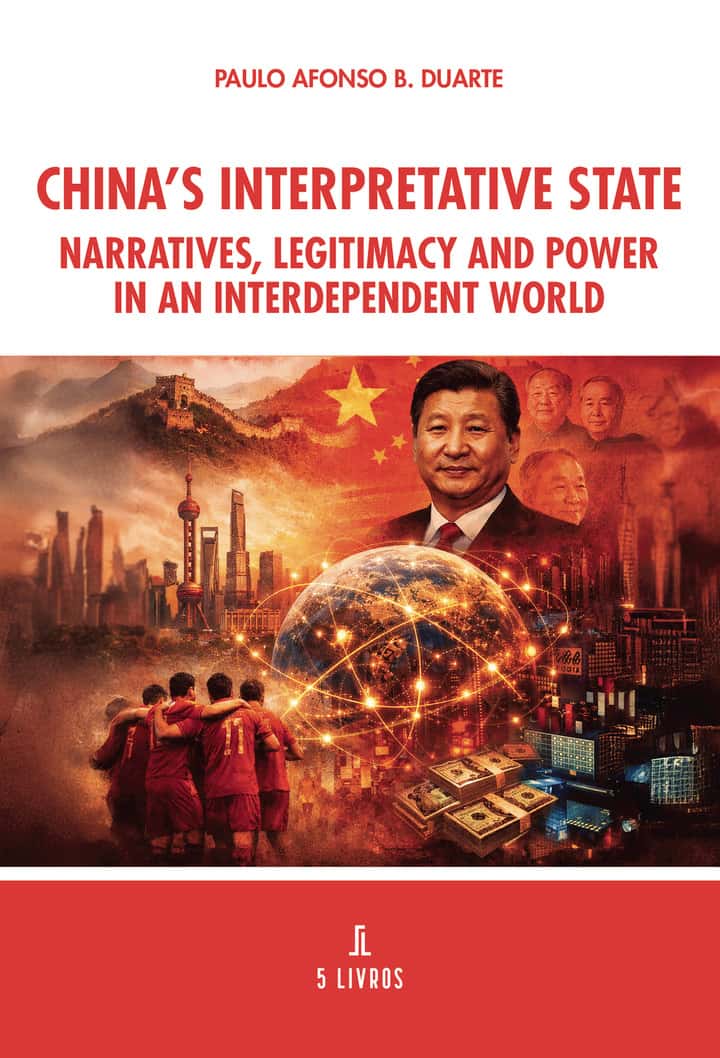
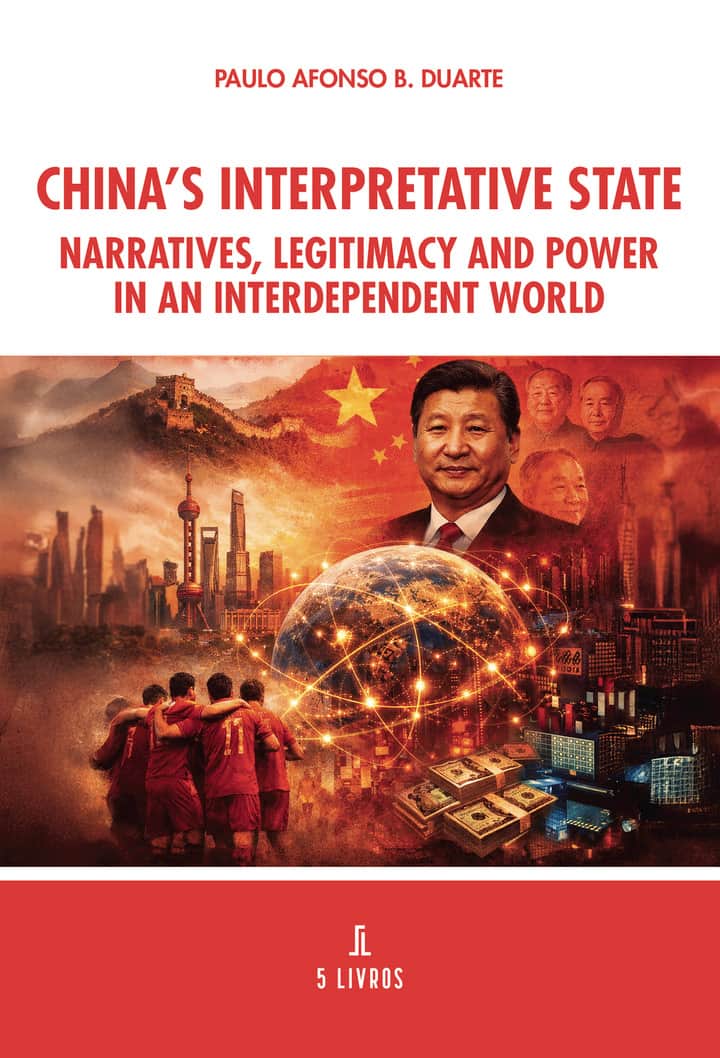
China’s interpretative state
Aún no hay valoraciones. ¡Sé el primero en valorar este libro!China’s rise is usually measured through economic growth, technological innovation, or military strength. Yet these indicators alone cannot explain how the country governs itself or how it positions its power in an increasingly interconnected world.
In China’s Interpretive State, Paulo Duarte offers a compelling new perspective: modern Chinese governance operates not only through institutions and policies, but also through the strategic construction of narratives that define reality, shape public expectations, and guide political action.
Drawing on political theory, discourse analysis, and international relations, the book examines how narratives function as instruments of authority across four key arenas: leadership legitimacy, social cohesion, foreign policy, and financial security. From Mao Zedong’s revolutionary discourse to Deng Xiaoping’s developmental pragmatism and Xi Jinping’s vision of national rejuvenation, Duarte reveals how China’s leaders have used interpretation itself as a tool of governance.
Insightful and timely, this book provides a deeper understanding of how China manages complexity, legitimacy, and power within today’s global order.
Los precios incluyen IVA
En stock
Formato: Papel
Cómpralos juntos

Precio total del pack
57,95 €61,00 €
Ahorras 3,05 €
Ficha técnica
- ISBN
- 9789895863105
- Páginas
- 156
- Tamaño
- 160 x 235 cm
- Formato
- Tapa blanda con solapas
- Año
- 2026
- Idioma
- Inglés
- Temática
- Ciencias políticas y teoría
Acerca del autor

Paulo Afonso B. Duarte
Assistant Professor at Universidade Lusófona do Porto and Invited Professor at the University of Minho. PhD and a Masters in Political and Social Sciences, by Catholic University of Louvain. Expert in China’s Belt and Road Initiative, on China, World Politics, and specifically Central Asia, where he carried out on-the-ground doctoral research (Kazakhstan, Kyrgyzstan and Tajikistan) with a scholarship awarded from Calouste Gulbenkian Foundation. His works have been published in Global Policy, Journal of Contemporary European Studies, Journal of Asian Security and International Affairs, Global Security: Health, Science and Policy, Journal of Eurasian Studies, among others.
Descubre libros relacionados





Valoraciones de los usuarios
0 reseñas
Deja tu valoración
Comparte tu opinión sobre este libro y ayuda a otros lectores.
Inicia sesión para valorar este libro.
Iniciar sesiónOpiniones de lectores
Todavía no hay valoraciones de este libro. ¡Sé el primero!