
José Marín Arcas
Sus libros
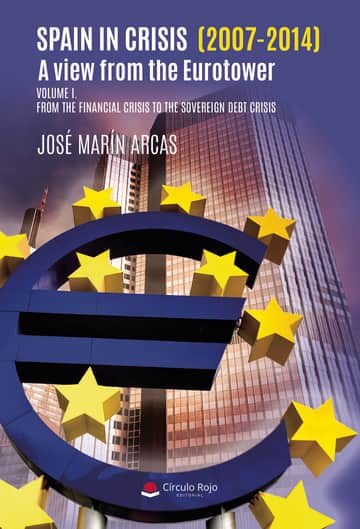
Spain in crisis (2007-2014). A view from the Eurotower
Spain in crisis (2007-2014). A view from the Eurotower
This book offers in four volumes a detailed narrative of the crisis in Spain (2007-2014), from the perspective of someone who followed it closely at the European Central Bank. Spain is the center of the narrative, but the book also describes the involvement of the main European institutions and events in other countries in crisis. It therefore presents an overview of the similarities and differences of the crisis in these countries and of the complexities of the institutional framework in which political decisions affecting the entire eurozone were adopted. The four volumes are:
· Volume I. From the financial crisis to the sovereign debt crisis (2007-April 2010).
· Volume II. Spain delays being rescued (May 2010-July 2011).
· Volume III. Rescuing Spain (August 2011-July 2012).
· Volume IV. Overcoming the crisis (August 2012-2014).
The narrative is organized around a sequence of events which represented milestones in the unfolding of the crisis in different countries: the eruption of the US financial crisis in the summer of 2007; the fall into the Great Recession of the international economy in the Autumn of 2008; the euro sovereign debt crisis in May 2010, when the economy was recovering from the recession; the fall of the Spanish economy into a second recession in 2011 and the reform of its Constitution in the summer; the need to rescue the Spanish financial system in the summer of 2012; the redress of the euro area sovereign debt crisis after the launch of the banking union initiative, and the resolve of the European Central Bank (ECB) to act as a lender of last resort of governments in a fiscal crisis; and finally, the economic recovery by the end of 2013 and in the following years.
This first volume sets the stage of the structural fault lines and cyclical position of the Spanish economy within the euro area for the succession of three related crises: an economic crisis, which started as a normal cyclical downturn; a financial crisis, which developed in parallel and deepened the downturn into a full recession; and a sovereign debt crisis, which was substantially self‑inflicted and compounded the problems of the prior crises, with far reaching social and political consequences.
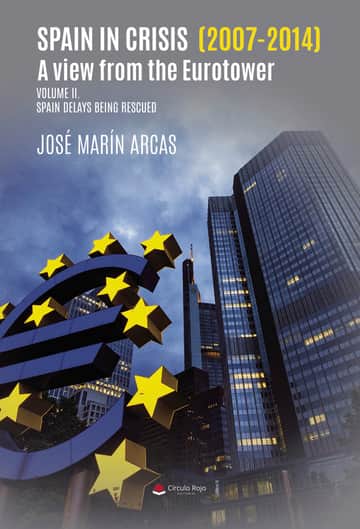
Spain in crisis (2007-2014). A view from the Eurotower. Volume II. Spain delays being rescued
Spain in crisis (2007-2014). A view from the Eurotower
This book offers in four volumes a detailed narrative of the crisis in Spain (2007-2014), from the perspective of someone who followed it closely at the European Central Bank:
· Volume I. From the financial crisis to the sovereign debt crisis (2007-April 2010).
· Volume II. Spain delays being rescued (May 2010-July 2011).
· Volume III. Rescuing Spain (August 2011-July 2012).
· Volume IV. Overcoming the crisis (August 2012-2014).
This second volume narrates the unfolding of the sovereign debt crisis. When it erupted in Greece, the Spanish economy was also at risk of being rescued, like Ireland and Portugal. President Zapatero’s U-turn announced in May 2010 temporarily stabilized the situation, although the small reduction of the budget deficit, the partial design of reforms and the slow progress in restructuring banks continued fueling doubts among financial market participants.
In the autumn of 2010, A Franco-German agreement announcing the possibility of public debt cuts as part of bailouts unsettled financial markets. As the ECB refused to continue financing the restructuring of the bankrupt Irish banks with short-term credits, Ireland had to request a bailout. The sovereign debt crisis threatened Portugal, whose fiscal policy to support the economy was proving counterproductive, and would request to be bailed out by the spring of 2011.
The economic policies implemented by the Zapatero’s government were not working and the Spanish economy was falling into a second recession. President Zapatero attempted to contain financial markets pressures by following the lines of least resistance, until being forced to call early elections. By summer, with a worsening crisis in Greece requiring a second bailout and the political uncertainty of a divided government in Italy, the only hope of containing the crisis was ECB intervention in the debt markets. The Spanish economy was on its way to being rescued.
Critiques:
“Jose Marín has published an excellent book which reflects his deep understanding of the complexity of European integration. Highly recommended reading”. Otmar Issing, former executive board member and chief economist of the ECB.
“José Marin’s book is an essential document to understand the threefold crises in Spain and other European countries: the economic recession, the financial crisis and the sovereign debt doom loop. Written by one of the most qualified witnesses, it is based upon the first-hand description of the facts and a rigorous analysis of the fault lines of the economy in the period 2007-2014. A must read!” José Manuel González-Páramo, former executive board member of the ECB.
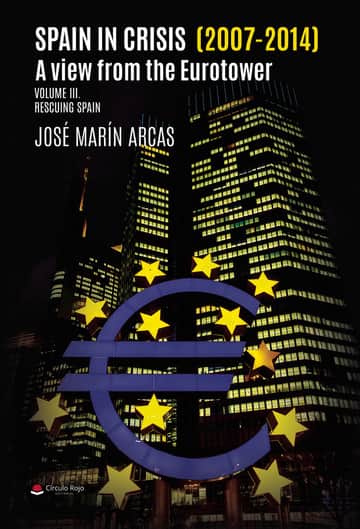
Spain in crisis (2007- 2014). A view from the Eurotower. Volume III Rescuing Spain
This book offers in four volumes a detailed narrative of the crisis in Spain (2007-2014), from the perspective of someone who followed it closely at the European Central Bank:
· Volume I. From the financial crisis to the sovereign debt crisis (2007-April 2010).
· Volume II. Spain delays being rescued (May 2010-July 2011).
· Volume III. Rescuing Spain (August 2011-July 2012).
· Volume IV. Overcoming the crisis (August 2012-2014).
The third volume, covers the last stages of the process leading to the rescue of the Spanish economy. In August 2011, the ECB intervention in debt markets buying Italian and Spanish debt barely contained the financial market pressures on bond yields, giving time for both governments to implement measures recommended by their central banks to restore investors’ confidence. Unable to adopt a more resolute approach, Zapatero took minor emergency measures and reformed the Spanish Constitution, the only initiative that the opposition was ready to support. However, the decision to restructure Greek debt and the insufficient action of the Italian government exacerbated the nervousness of financial markets and led to the fall of the Papandreou and Berlusconi governments in November.
After general elections in Spain Rajoy’s conservative government replaced Zapatero’s socialist government and pledged to consolidate public finances, undertake serious structural reforms and restructure banks. In 2012 an austere fiscal policy was implemented and an effective labor market reform enacted. Other reforms were less ambitious and the previous strategy of restructuring banks without committing public funds to clean up their balance sheets was continued and failed. The financial drain of the Spanish economy was severe and the governor of the Banco de España thought that country would be “kicked out of the euro”. In the summer of 2012, the Spanish government had to request financial help to complete the restructuring of banks.
In the meantime, tortuous debates over reforming the governance of the European monetary union to prevent future crisis and establishing an effective mechanism to manage them led to the strengthening of fiscal rules and the creation of the European Stability Mechanism. To break the link between banks and their national sovereigns, which was at the heart of the financial crisis in Europe, a “banking union” project was agreed to put supervision of banks under the ECB and unify banking regulations and restructuring procedures. With these premises, the ECB could launch its Outright Monetary Transactions program, which would complement the stability mechanism to manage future sovereign debt crisis.
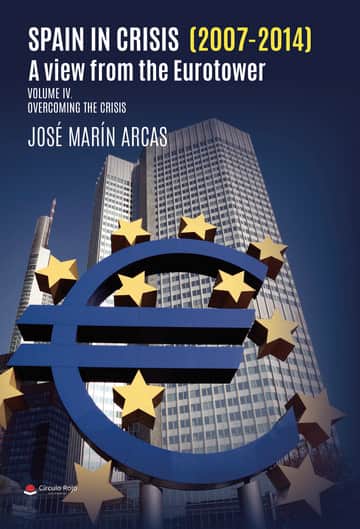
Spain in crisis (2007-2014). A view from the Eurotower. Volume IV Overcoming the crisis
This book offers in four volumes a detailed narrative of the crisis in Spain (2007-2014), from the perspective of someone who followed it closely at the European Central Bank:
Volume I. From the financial crisis to the sovereign debt crisis (2007-April 2010).
Volume II. Spain delays being rescued (May 2010-July 2011).
Volume III. Rescuing Spain (August 2011-July 2012).
Volume IV. Overcoming the crisis (August 2012-2014).
The final volume of this book covers the economic recovery and the slow development of the banking union. The recovery of the Spanish economy followed an unprecedented pattern in its history. Previous episodes had been characterized by correcting the external imbalance and restoring competitiveness through devaluation, leading to an export led rebound of output and internal demand that started a new cycle of rising indebtedness, credit, wages and inflation. Within the monetary union, the recovery would be led by exports, as on past occasions, but in contrast, it would be “debtless”, with private sector deleveraging, “credit-less”, with a continuous contraction of credit, and “priceless”, with a negative inflation differential with respect to the euro area.
In the adjustment of the Spanish economy, the structural fault lines existing in the government, in market regulations and in the financial sector were addressed with unequal results: rather poor in the political sphere and government performance, mixed in the economic reforms, good in financial restructuring. Concerning the euro area fault lines, the “Four Presidents Report” had advised in 2012 that four basic elements would need to be implemented over the next decade to provide a coherent and comprehensive architecture for the eurozone. These were integrated frameworks for financial, fiscal and economic policies, as well as democratic legitimacy and accountability in decision-making within the monetary union. Twelve years later, very little progress had been made on all four fronts.
Critiques:
“Jose Marín has published an excellent book which reflects his deep understanding of the complexity of European integration. Highly recommended reading”. Otmar Issing, former executive board member and chief economist of the ECB.
“José Marin’s book is an essential document to understand the threefold crises in Spain and other European countries: the economic recession, the financial crisis and the sovereign debt doom loop. Written by one of the most qualified witnesses, it is based upon the first-hand description
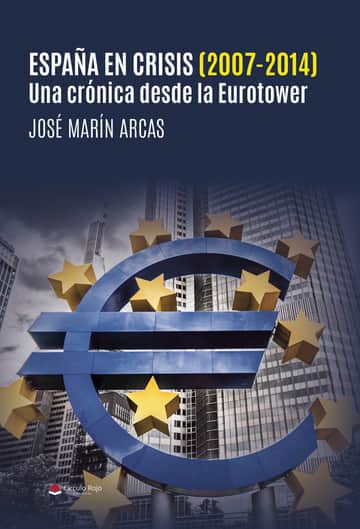
España en crisis (2007-2014). Una crónica desde la Eurotower
Las crisis económicas son, en muchos aspectos, como los terremotos. Se producen por la interacción de fallas en la estructura de nuestras instituciones económicas (como ocurre con la corteza terrestre) con desequilibrios cíclicos (equivalentes a los desplazamientos de las placas tectónicas) que ejercen una presión acumulativa sobre ellas. Cuando esa presión alcanza un punto de ruptura, se desencadena la crisis (o el terremoto). Esta es la historia de la catástrofe provocada por la interacción entre los desequilibrios cíclicos y las fallas estructurales de la economía española.
La crisis financiera internacional estalló en agosto de 2007 en Estados Unidos; la recesión económica mundial se produjo en septiembre de 2008, seguida por la crisis de deuda soberana en la zona del euro entre 2009 y 2010. La economía española se hundió a partir de 2007 y no inició su recuperación hasta 2014. En realidad, la crisis en España fue la sucesión de tres crisis interrelacionadas: una crisis económica, que comenzó como una recesión cíclica normal; una crisis financiera, que se desarrolló en paralelo y profundizó la recesión hasta convertirla en una gran recesión; y una crisis fiscal, sustancialmente autoinfligida, que agravó los problemas de las crisis anteriores y tuvo consecuencias sociales y políticas de gran alcance.
Sin embargo, existe una diferencia crucial entre los terremotos y las crisis económicas. Mientras que en los terremotos hay poco margen de acción para prevenir su ocurrencia, en las crisis sí es posible actuar. Aunque no se puedan eliminar por completo las fallas estructurales más profundas, es posible reformar la arquitectura de nuestras instituciones y atenuar los desequilibrios cíclicos que pueden desencadenar una crisis. Este libro también analiza los cambios institucionales introducidos para prevenir y afrontar futuras crisis.
Esta obra ofrece una crónica concisa de los principales acontecimientos que marcaron el desarrollo de la crisis. El texto ha sido extractado y traducido de un análisis más detallado en cuatro volúmenes, publicados en 2024 en inglés, que incluyen abundantes referencias a fuentes para profundizar en los aspectos más complejos de la crisis.
La obra completa está disponible en Amazon:
Spain in Crisis (2007-2014). A View from the Eurotower
Volumen I: From the Financial Crisis to the Sovereign Debt Crisis → https://amzn.eu/d/7PH2Wnb
Volumen II: Spain Delays Being Rescued → https://amzn.eu/d/cfZHoVY
Volumen III: Rescuing Spain → https://amzn.eu/d/aENbOfG
Volumen IV: Overcoming the Crisis → https://amzn.eu/d/gSdbmoM