
Miguel Arcángel García Rojas
Sus libros
Language interference in language learning
Este libro provee ejemplos claros tomados de situaciones reales los cuales han sido estudiados por los autores en su larga trayectoria profesional dando al mismo tiempo guías sencillas para corregir estas faltas. Este libro incluye los falsos cognados en los cuales muchos estudiantes o aprendices del idioma inglés caen con frecuencia, estas palabras son examinadas y su real significado es dado para expresar lo que realmente se desea.
Let’s play
These are some activities that can be used at elementary level and above. The aim is to help students express themselves and communicate with each other in English principally through talking, but also through writing. The variety of communicative activities suggested here can be a good starting point for users to store a big collection of them, whether invented or adapted. The teacher’s job is to give the necessary instructions and examples, and them just to observe until the activity is finished. At the end the teacher can comment, make corrections, etc, but normally s/he should not interrupt the students unless they’re confused, Finally, users are invited to think that in order to succeed in achieving a purposeful communicative activity, functional communicative use of the foreign language is preferable to grammatical correctness expressed in very few utterances. When we were children, we all used to spray games, enjoy the fun of them and make others enjoy them too. As we used to have a good time playing them, we also used to learn something new.
Joke Time
Good jokes make you laugh. And laughter is a kind of therapy or safety valve that relieves your stress and tension. After laughing, you feel better because your heart rate slows down, your muscles relax and your brain becomes more alert and efficient. lf you are teaching or learning English, maybe you can use this book as didactic material for making the language learning more interesting, funnier and easier. Through this material, you can teach or learn the use of standard English as well as the different ways and strategies for narrating and the formal use of punctuation marks. Linguistics, grammar, storytelling, joketelling and writing are sorne of the aspects you can work in this book. Also, you expand your stock of vocabulary since you feel compelled to infer or look for meanings of unknown words in order to understand a joke, a riddle, a thought or the alike. One of the best ways you can use this material is by having your students dramatize sorne of the situations presented in the jokes. lmagination is essential to create, expand and adapt the contents to new contexts or situations.
Famous tales and stories for performance
Real life is daily improvising, a drama that includes spontaneous performance, an improvised script on an uncertain stage. Without a doubt, success depends on the way we play the role assigned to us. That’s life! Indeed, real life seems to be closely connected with real drama. As a matter of fact, people’s behavior has a lot to do with performance, which might be successful or unsuccessful, suitable or unsuitable, appropriate or inappropriate. It also seems that individuals are bound to learn how to perform, behave, and act if they want to succeed in life. This is not currently taught at school, but is should be, don’t you think so? What is good-manners and politeness? In particular, how are they learned? It is a result of training, repeated performance, and trial and error on the real life stage. This theatrical approach is addressed to help students and even teachers to be well aware of the fact that ideas, feelings, emotions and actions are necessarily connected as a communicatively coherent whole and that educational drama practice may be the way to learn, not only English, but also how to be more practical and effective communicators. Famous Tales and Stories for Performance es un volumen de cuentos e historias apropiadas para llevarlas a escenario tanto en la escuela primaria como en la secundaria. El maestro tiene que adoptar una metodología y unas técnicas adecuadas para la lectura o para los ensayos de actuación, insistiendo en los problemas fonéticos y de vocabulario, cuando los atores son niños, cuando son jóvenes, la insistencia ha de ser en los problemas sintácticos y fonéticos.
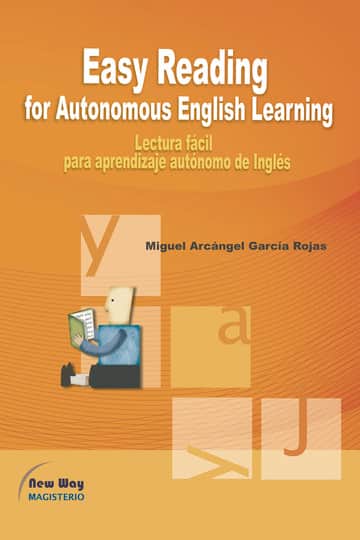
Easy reading for autonomous english learning
Esta es una propuesta de estudio, a la manera de un curso de inglés intensivo de inducción motivacional con tendencia hacia el autoaprendizaje del idioma extranjero, a través de la adquisición de estrategias básicas para la comprensión de lectura en inglés. Está acompañado de recursos específicos que buscan estimular esta dinámica de aprendizaje por construcción del sujeto. El libro presenta, secuencialmente, el planteamiento cuidadoso de lo que se va a aprender, lo que se ha de hacer para aprenderlo, y lo que se ha de hacer para demostrarlo. El desarrollo de la competencia comprensiva de lectura en lengua extranjera (habilidad receptiva del lenguaje) generará en el aprendiente un conocimiento funcional de la misma, con un beneficio adicional sobre el desarrollo de la habilidad productiva del lenguaje (escritura o habla), habilidades éstas que se pueden desarrollar en el proceso inmediato. El hecho de que uno, de cada cinco de los habitantes del mundo, hable el inglés hace pensar que para todo hispanohablante el manejarlo, por lo menos en términos de lectura comprensiva, es prácticamente obligatorio.