
Harold Gene Diab
Sus libros
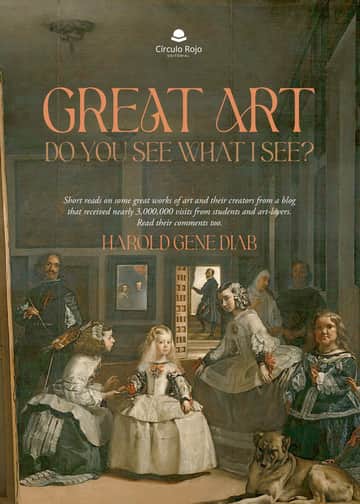
Great Art: Do You See What I See?
I would like to show readers what I saw in some of the great works and to make them feel my own enthusiasm and curiosity. I wrote these articles for a blog called The Best Artists and was surprised and delighted at the enthusiastic comments by my readers. Many were students preparing for some exam but there were also experts on art and the work or the artist that I had written about. With their remarks and their knowledge they instructed us all. I have gratefully incorporated many of their comments into these chapters and so given the readers of this book a chance to see what others saw.
My aim is to give you the opportunity to skip the rigmarole and take a more personal look at some great art. In the past it was for the very few. Now you are one of the privileged. For centuries artists found ingenious ways to represent their world, and how each of them succeeded is there for you to judge. You can read the evaluations of art historians or you can first look with your own eyes and heart.
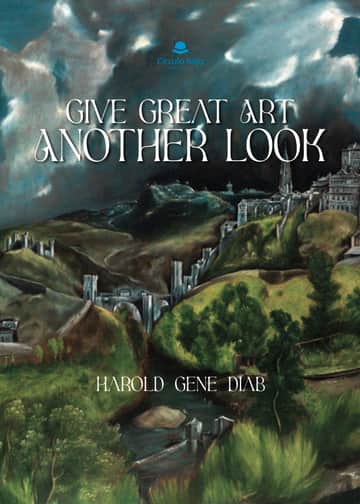
Give Great Art Another Look
This book, like another one called Great Art: Do You See What I See?, shows you
masterpieces by some of the world’s greatest artists. It includes works by classical
Greeks, geniuses like Giotto, Leonardo da Vinci, Michelangelo, Andrea del Sarto,
Vasari, Cellini, El Greco, and Goya. Each short read offers fascinating anecdotes
about the artist and the work and tells you why the painting is important, but then
lets you judge for yourself. Maybe you won’t agree with the author. Some of the
readers didn’t either and sent in a comment. Those are here too and might make
you change your mind.
The aim here is not only to inform but to make you curious. If you get “caught”
you won’t stop after each chapter but will go on investigating further and so make
the work and the artist a more complete part, and more solid part, of your views.
Learning is one of the greatest joys there is. See if that’s not true. It’s anyway easy
with the most captivating creations man ever came up with.
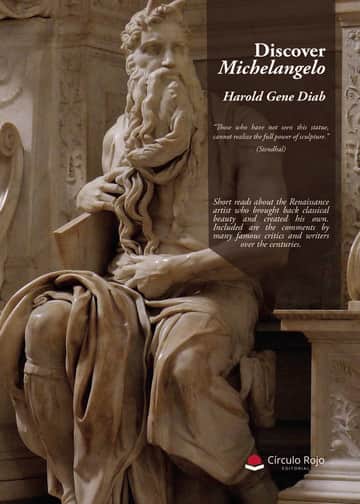
Discover Michelangelo
I stumbled upon Michelangelo and caught a glimpse of his “stairway to heaven”. Now it’s your turn.
Read about his fascinating life and work and see whether you would agree with his first biographer and
friend, who called him “God’s gift to man”.
Did you know that when Michelangelo was a boy a duke invited him to live in his palace to learn
how to carve stone but also to sit with his noble sons at table and during their classes? They had the
best teachers in the country. Michelangelo carved his giant figure of David from a big block of marble
that nobody wanted because it had a big hole in it. In eighteen months, he finished one of the greatest
statues there ever was. He and Leonardo da Vinci knew and disliked each other “intensely”. The Town
Hall of Florence actually commissioned a painting for its walls from both of them and there was a kind
of contest. Who do you think won?
Though Michelangelo was a sculptor, a pope ordered him to decorate the five-hundred-square-meter
ceiling of the Sistine Chapel. “But I’m not a painter, Your Holiness,” replied Michelangelo. The Pope
insisted and Michelangelo worked there for four years while painting the most impressive paintings no
one had even seen or imagined.
You’ll find dozens of stories like those and, at the end of the book, besides some of my readers’
comments, a short biography with many illustrations, and a chronology of his works.
I am an American teacher who discovered Michelangelo while having a coffee in the main square of
Florence, Italy. When I saw the reproduction of Michelangelo’s David at the entrance to the big palace,
I couldn’t believe my eyes. In America I had never seen anything that good.
While learning all I could about Michelangelo and his time, I created a Wordpress blog and started
writing dozens of articles to tell everybody the unbelievable facts. The chapters of this book were
originally those blog articles and they got a lot of replies from art lovers and even professionals,
like painters and sculptors. Their comments on the David, the Pietá, the drunken Bacchus, and
Michelangelo’s carving technique instructed us all and turned my information into lively discussions.
I ended up changing my opinion about Michelangelo’s last sculpture: the Rondanini Pietà. Maybe you
will too.